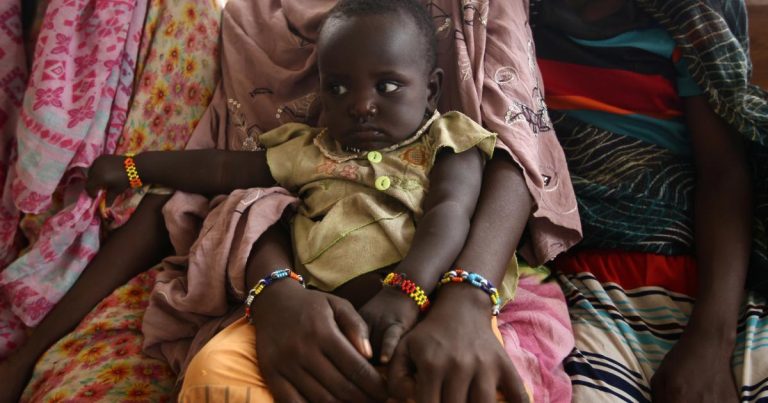
Kansas Measles Surge Sparks Urgent Public Health Warnings | Image Source: apnews.com
TOPEKA, Kansas, March 25, 2025 – Kansas is now at the centre of a growing public health concern, as the measles epidemic has doubled in one week, reaching 23 confirmed cases. Public health officials say that the epidemic, which has spread to six southwestern counties, is part of a disturbing national trend. Infections have also been reported in Ohio, New Mexico, Texas and other parts of the country, raising the red flag on immunization coverage, public health infrastructure and the risk of other outbreaks of controlled diseases.
According to the Kansas Department of Health and Environment (KDHE), the majority of people infected are unvaccinated children aged 5 to 17. The genetic sequence links these cases to larger outbreaks in Texas and New Mexico, where the virus has already caused hundreds of infections and at least two deaths. According to the Centers for Disease Control and Prevention (CDC), the United States has faced the highest incidence of measles since 2019, a worrying sign of a possible decline in vaccination efforts after VOCID.
“Given the activity of measles in Texas, New Mexico and other states, we are disappointed, but we were not surprised that several cases occurred here in Ohio, and the known exposure in some counties,” said Dr. Bruce Vanderhoff, Director of the Ohio Department of Health, who echoes the feelings of health officials across the country.
Why is measles spreading so fast in Kansas?
The rapid spread of measles in Kansas is directly related to low immunization coverage in several counties. According to the State Health Department of School Year 2023-2024, vaccination rates in Morton County are 82 per cent, Stevens County 83 per cent, Haskell County 58 per cent and Gray County 66 per cent, all well below the 95 per cent threshold for herd immunity. Public health experts say that once vaccination rates are below this level, communities become very vulnerable to vaccine-preventable disease outbreaks.
The doctor. Dana Hawkinson, Medical Director of Health System Infection Prevention at the University of Kansas, explained the urgency of the situation:
“With the reduction in the overall immunization rate, I think we should expect more cases. Only because fewer people are vaccinated means more people who are susceptible to the disease.”
Hawkinson added that measles can remain in the air for up to two hours and is one of the most contagious viruses known. This makes internal exposures even brief a serious risk, especially in public settings such as schools, transport and health facilities.
What are the symptoms of measles and how does it spread?
Measles or rubella is a viral disease transmitted by respiratory droplets when an infected person coughs or sneezes. It usually starts with symptoms similar to cold: fever, sore throat, spongy nose and cough. Within a few days, white spots called Koplik spots may appear inside the mouth. Thus, a characteristic and stained red rash breaks down, usually beginning with the face and extending.
Dr. Hawkinson highlighted the severity of the disease:
“This can be a very devastating disease. This is unfortunate because we know we have the best proactive safety measure, and it’s the vaccine.”
According to the CDC, about one in five unvaccinated people receiving measles will have to be hospitalized. Serious complications may include pneumonia, brain inflammation (encephalitis), deafness and death. Although no deaths or hospitalizations have been reported in Kansas, Texas has already recorded a child death, and New Mexico is investigating the death of an adult who has been tested positive for measles.
What are we doing to contain the Kansas epidemic?
National and local health services work all the time to contain the outbreak. According to KDLE, isolation measures exist for infected persons and vaccination campaigns are increasing in affected counties. The Department also provided advice to recommend early vaccination of children aged 6 to 11 months in areas affected by the epidemic, which recommends the first dose of 12 to 15 months.
Democratic Governor Laura Kelly addressed the situation at a health conference in Wichita:
“They are safe and effective. I have two children. Both were vaccinated. They’re alive and well.”
Despite these efforts, the epidemic continues to grow. The first case in Kansas was identified in Stevens County on March 13, and since then the virus has spread rapidly in Grant, Morton, Haskell, Gray and Kiowa counties. Of the 23 confirmed cases, 20 were not vaccinated, one was few and most were children.
How is this epidemic compared to national trends?
The situation of measles in Kansas is part of a broader national emergency. According to CDC reports, Texas has recorded over 320 cases since the end of January, making it the country’s largest epidemic. New Mexico continues with 43 cases, and Ohio recently reported 10 new infections that were attributed to a single initial case in Ashtabula County.
The CDC defines an outbreak as three or more cases per place or hour. As Kansas crossed that threshold, he joined the list of states facing active transmission. This year, other states have confirmed cases such as California, Georgia, Michigan, New Jersey, Pennsylvania, Alaska and Rhode Island. If the current trend continues, 2025 could exceed previous years in total, threatening the status of the United States as a country with the elimination of endemic measles transmission.
What role does vaccination policy play in this epidemic?
In the middle of the epidemic, Kansas legislators are weighing on changes in immunization policy that may have a greater impact on immunization rates. A recently passed Kansas House bill contains provisions to reduce costs and training requirements for day care centres. The introduction of this bill is a controversial amendment that extends religious exemptions for vaccines to “moral and ethical objections”
Rabbi Moti Rieber, Executive Director of Kansas Interfaith Action, expressed serious concerns about the implications:
“In anti-vax sentiment, it is sometimes called ‘religious’ but in reality it is more about people’s fears. There really is no religious basis for this.”
Rieber and other public health advocates warn that such changes could pave the way for similar exemptions in K-12 schools, further compromising community protection. “The biggest problem is the potential for this to be a precedent,” Rieber said. “Next, this would remove the ability of schools or facilities to effectively protect their children by not allowing unvaccinated children to be in the environment. »
What should families do in Kansas?
Public health officials strongly urge families to review their immunization situation, especially if they live in or near the counties affected by an epidemic. CDC and KDLE recommend two doses of MMR vaccine (mediles, mumps, rubella) for complete protection. The first dose is usually given between 12 and 15 months, and the second dose between 4 and 6 years.
Dr. Hawkinson noted:
“We have a vaccine used for five to six decades. He has a great history of safety and efficiency. It’s time to check the immunization status of your family and family. »
Families are also encouraged to take basic precautions if someone has symptoms of measles. Stay home, avoid contact with others, and call before visiting a medical facility so that preparations can be made to avoid exposure.
The KDLE website provides resources to families, including immunization schedules, symptom checklists and immunization sites. Schools, child care providers and paediatricians also receive advice on how to identify, isolate and report suspected cases.
While Kansas is currently at the centre of attention, the national trend reveals a more important problem: declining immunization rates and increasing vulnerability. As the discussion on exemptions and public health policy becomes more intense, one thing remains clear: preparing for the next outbreak begins with the simple and proven power of vaccination.